Party!

Yesterday, we held our traditional June Garden Party. As for all previous events this year, the weather looked rather iffy with thunderstorms in the forecast. Also, the previous days were so unseasonably cool that we feared we would need a warm sweater. But it all worked out beautifully: The fog lifted, the temperature warmed up quite a bit, and a light rain only came when we were already packing up.

The Party started with a short general meeting. First, we discussed a few items of usual garden business, including an update on our delicate water system (which is holding up nicely).

Then, to our surprise, the mayoral candidate Jim Walden paid us a visit. Jim Walden is running as an independent in the upcoming election. He is a lawyer and a big champion for community gardens. In 2013, Jim had been part of the team that supported our garden in the lawsuit against the NYU expansion plan, which threatened our very existence. The lawsuit was not successful, but hey, we are still here! And Jim is still advocating for better protection of all community gardens.

Above on the left, our chair Ellen talks about composting, and on the right, Jim Walden explains his program to protect green spaces in NYC.

After this official part, it was time for the potluck party. As always, the food was varied and delicious.

It is really nice when so many gardeners get together in the garden instead of on Zoom like during most of our other meetings.

Finally a photo of a plant that looks particularly stunning right now: Acanthus mollis or bear’s breeches. The plant originates from the Mediterranean and is best known for its leaves, which feature prominently at corinthian capitals. Here are the flowers.

Let’s Make Music!

Every year on the day of the summer solstice, people gather to make and listen to music for “Make Music”, an event that happens all around the world in 120 countries and over 1000 cites, including New York.

We have been participating at “Make Music New York” for many years, and our favorite band, the Nevermind Orchestra will be playing again this year in the afternoon from 4 to 6pm.

We are excited that this year, a second musician, the Jazz Saxophonist Ras Burnett, will also pay in our garden from noon to 1 pm.

Let’s hope for good weather. The 21st is a Saturday and we had a lot of rain on weekends lately. However, the musicians of the Nevermind Orchestra are known to not be deterred by a little rain. They played in our garden under the umbrellas before.

Not a day for butterflies

This year, the Weather Gods are smiling at our plants but not at GreenThumb events. This weekend was “Open Garden Day”, two days of fun events at all community gardens in the city. And it rained – again. Saturday was completely wet, Sunday was surprisingly cold and misty with just a few dry stretches.
LaGuardia Corner Garden had prepared a little bug-themed crafts workshop. We wanted to make origami butterflies with our visitors. But paper and rain do not go together very well. As Johannes observed correctly: this was no weather for butterflies. We had to have to save this activity for a different day.

The plants, however, liked the rain. Tomatoes, basil and marigolds would prefer it a little warmer, but summer heat will come soon enough. At the moment, Clematis are the stars.

And let us not forget the bell-flowers, the campanulas. We are so lucky to have all of this beauty at out fingertips.

Let’s Grow Together

This week was the National GrowTogether Conference, a meeting of community gardeners from all over the country. It was organized by the NYC ParksGreenThumb in partnership with the American Community Gardening Association and the Denver Urban Gardens’ Urban Garden Project. This was the first time the GrowTogether conference went national, took place in June and not in early Spring, and went on over several days. This year’s theme was “Seeds of Resilience”.

Saturday was the day that I could attend, and I had a great time. The day started with a keynote talk by Robin Wall Kimmerer, the Potawatomi botanist, ecologist, and writer most gardeners know from at least one of her wonderful books: “Braiding Sweetgras: Indigenous Wisdom, Scientific Knowledge, and the Teachings of Plants“. Who has not read this book should pick up a copy. In her talk, Robin spoke about our relationship with the land and how the land gives to us freely. These gifts, we can gratefully accept, but we have the responsibility to give back. Here is what she thinks we need to do:

Robin talked about climate change and the engineering efforts to sequester carbon into the ground. She reminded us that plants have been doing this since the beginning of time: take CO2 from the atmosphere and turn it into organic matter, much of which is in the ground (the roots!). All of this happens with solar energy only. Robin is a scientist, and she knows that plants can’t solve our climate crisis on their own. We people have to help in many ways. Robin’s response to some politician’s call to get even more oil out of the ground is this:

I think we can all agree.

The 2025 National GrowTogether Keynote Address by Robin Wall Kimmerer can be watched on the NYC Parks GreenThumb YouTube Channel until June 26th.

The keynote talk received standing ovations and was followed by panel discussions and many workshops, including a meditation workshop by our own Eileen Ain.

It was hard to pick a workshop from the many offers, so I decided to just have fun and go into a room where Don Boekelheide from Charlotte, NC made music with us. For an hour, we sang garden- and gardening- related songs. These were a fun mix of children’s songs, songs by famous songwriters (e.g. Arlo and Woody Guthrie and Sally Rogers), a British protest song from the 17th century, other songs in English like “The Garden Song” and songs in Spanish. The “Canción de Jardinera” from the Argentinian songwriter Maria Elena Walsh has a lovely verse:

Merenme, soy feliz
En nuestro jardines crecen
Verduras y amigos los dos
Con amor y el compost

(More on compost later)

Look at me, I’m happy
In our gardens grow
Veggies and friends both
With love and compost

Singing together is always a lot of fun, and so is making things. During the next workshop, I and many others learned from Sofia van Leeuwen how to make cordage from Yucca filamentosa leaves and the outer layer of the stalks of perennial hibiscus.

Not bad, right? This string is strong and much nicer than the plastic-encased wire that we often use to tie up our plants!

While we gardeners were sitting inside, our gardens got some nice rain. And LaGuardia Corner Garden also got compost! The department of sanitation had organized a compost give-back event at our garden during which neighbors and gardeners could get one or more large bags of compost.
We thank all New Yorkers for throwing their food scraps into the brown bins and not into the trash. That is one small thing we can all do to give back to the land and combat climate change.

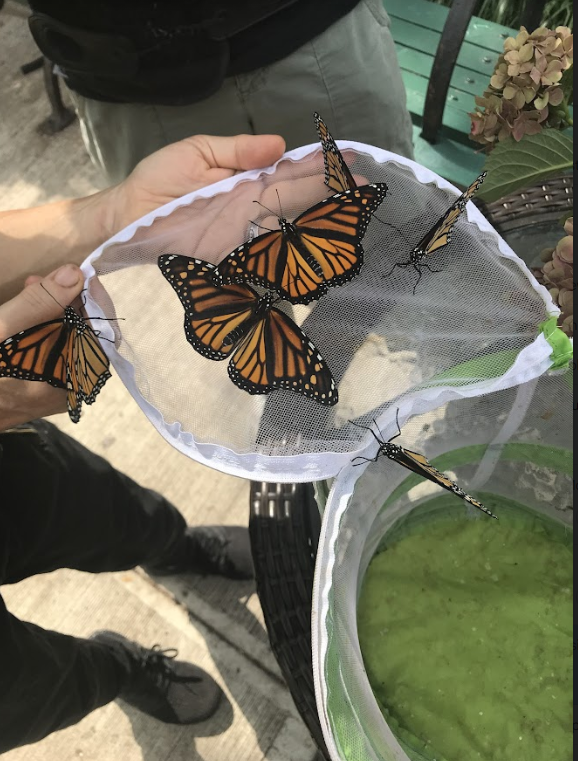
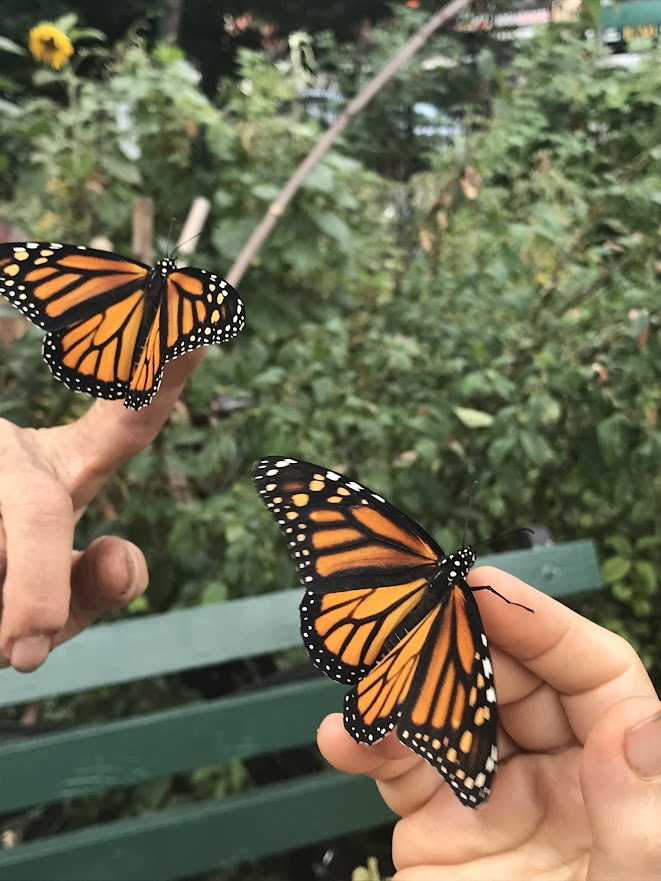
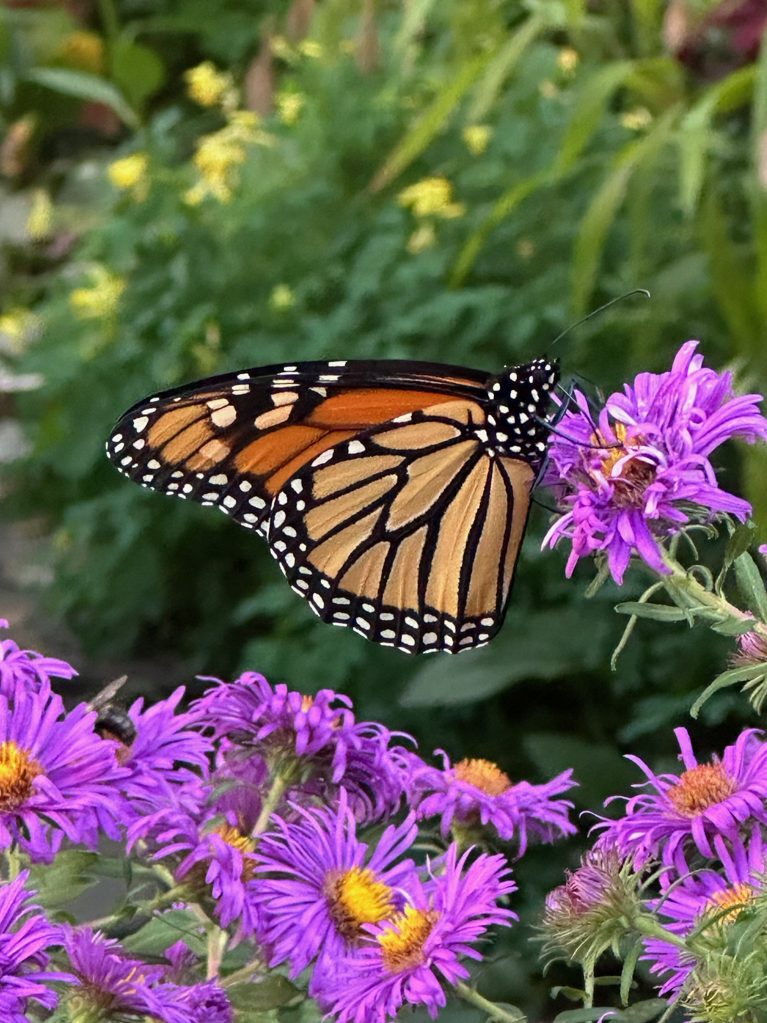
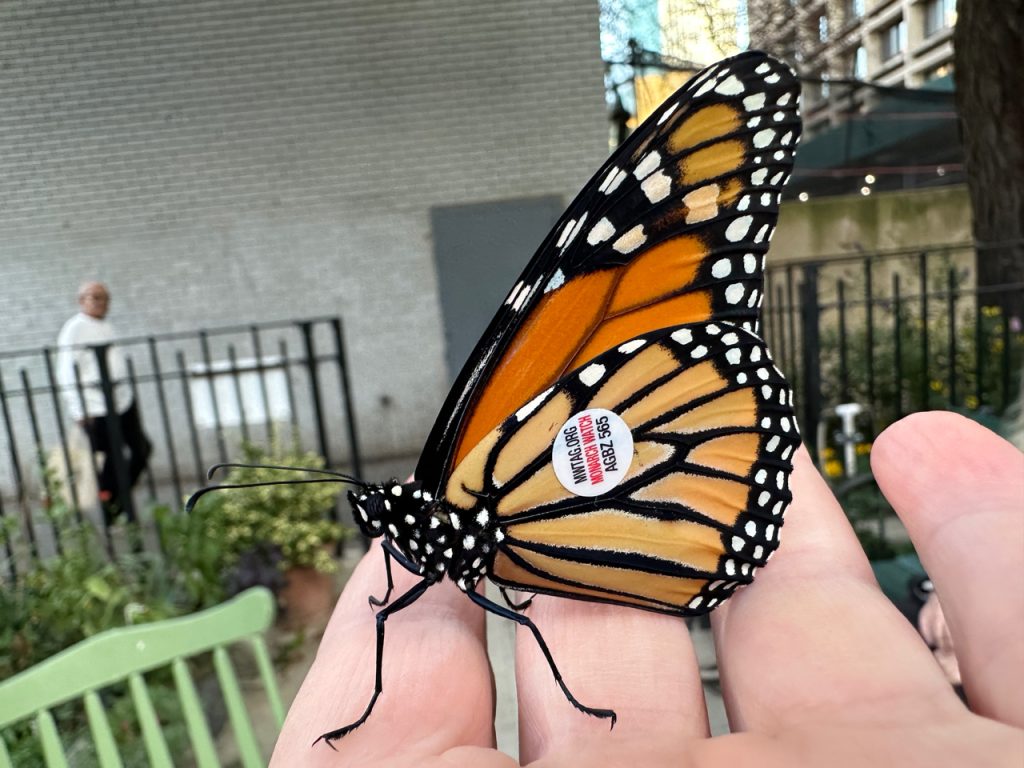
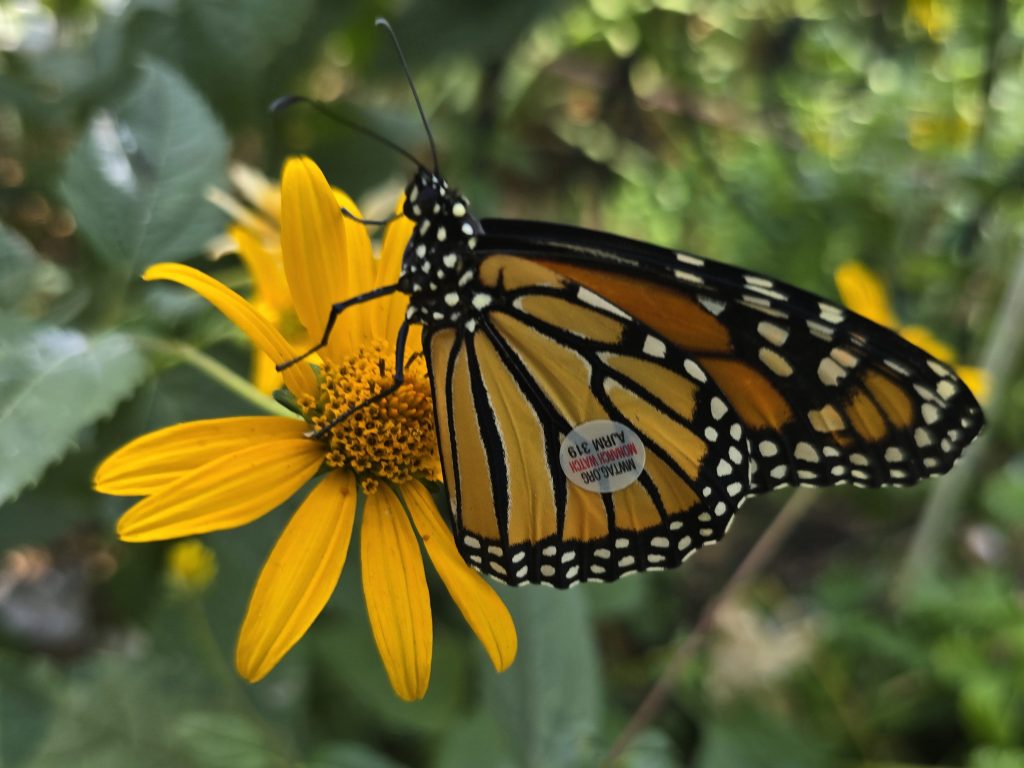
One of the first butterflies of the season appeared in the garden on Friday.

Roses and bugs

It is the first day of June and some of our roses are already finished blooming. Pat Austen still has a few flowers but she does not look as lush as just a few weeks ago on the photo below.

The pure white Madame Hardy and the lavender colored Paradise put on their prettiest flowers in mid May.

Right now, the roses with clusters of small flowers are prettiest: below are Ballerina and Lavender Dream.

Here are some more pictures of our favorite roses: Zephyrine Drouhin and Eglantyne.

The flowers are really pretty, but look carefully at the leaves. This year, almost all of our roses had some leaves that looked partially papery white. This was the work of so-called rose slugs, the larvae of a sawfly. These animals are neither flies nor slugs but plant-eating wasps, relatives of bees, hornets and yellow jackets with an appetite for green leaves. This year we had a lot of them!

The larvae of some species eat only the soft green underside of the leaf and leave the harder tissue behind. The adult sawflies are very small animals. To show one, I borrowed a photo from an article by Michael Raupp.

Today, it looked like these “slugs” were done nibbling. However just as our roses grow back new leaves, the next round of attack is in progress. The larvae of another sawfly species eat the whole leaves while those are young and tender.

Meanwhile, our resident sparrows have babies to feed. Hopefully, many, many sawfly larvae will end up inside those hungry beaks!

Roses are not the only plants under attack right now, and sawflies are not the only hungry insects. The cool wet spring was perfect for aphids, which seem to multiply by the minute. But here, too, predators are getting ready. The red blob on the sage leaf below is the pupa of a lady bug. The next generation of these beetles have a feast waiting for them.

This is the only way pests are controlled in our garden. We don’t use sprays or other poisons. Since our livelihood does not depend on it, we can afford to let Nature take care of things.

Finally an update on our wild bees: This evening, we saw the first male longhorn bee of the season. He was right where we expected to find him: sleeping in the first open blossom of a Heliopsis sunflower.