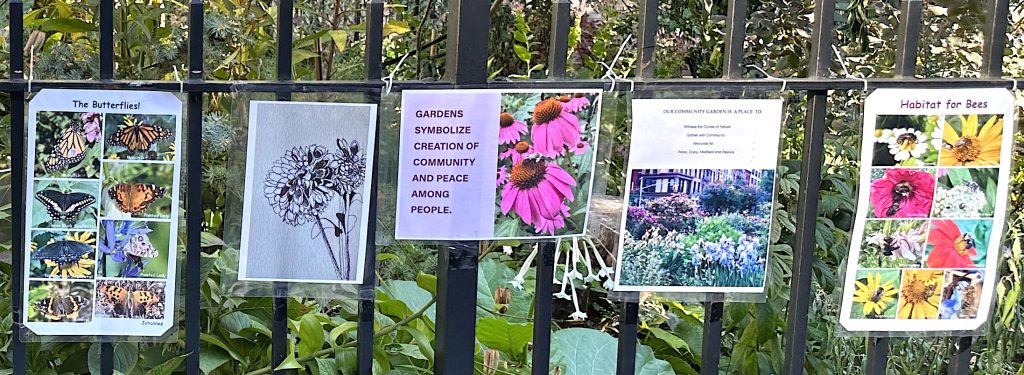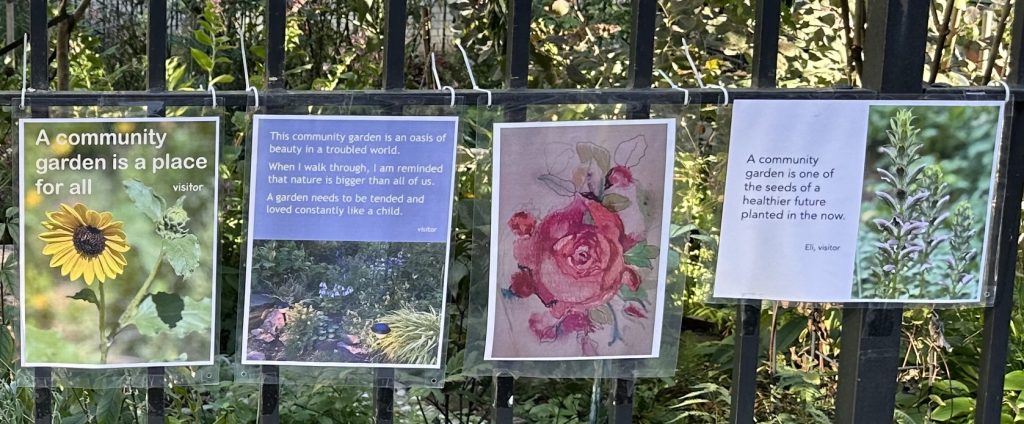
Season recap part four. August – September: Monarchs!

As in previous years, Johannes, our butterfly expert, collected eggs and small caterpillars of monarch butterflies to let them grow up in a safe environment (his apartment), free of predators and parasites. This is not an easy feat! Each little larva needs fresh milkweed to eat all the time; and as we all know, caterpillars are very very hungry. When they have grown up, they need just the right place to pupate. Finally, the adult butterflies needs a safe place to dry out their new wings before they can go out into the world. Considering all of this, it is amazing that Johannes could raise a stunning number of 159 monarchs this year!

Johannes often recruits garden members or neighbors and their children to help him let the young butterflies fly.

In late August and September, when the season ends, monarchs are preparing for their fall migration. The butterflies that hatch at this time of the year are larger and stronger than earlier ones. They also don’t have developed ovaries or testes. Their entire body is tuned for flying.


For the longest time, it was a complete mystery where monarchs go in winter. Now, we know that they fly all the way to Mexico. Scientists found out about this because people applied a small tag to a wing of tens of thousands of monarchs in the hope that some of them would be found later somewhere else on the migration route. And it worked. A few monarchs tagged in the northern part of America were found in cool mountain forests in Mexico, where millions of them are roosting on the branches of fir trees. They stay there until Spring. Then, they fly back north until they reach a place in Florida or Texas where milkweed is growing. There, the next generation of monarchs grows up. When these are adult, they fly further north. It takes several generations until the butterflies reach New York again. This is why we don’t see them until July.


The mystery of the monarch migration is still not fully solved. For one thing, we don’t know by which route Monarchs reach their winter homes and how they know where they have to go. After all, no butterfly that is embarking on this journey has ever done it before. More tagging is needed to find out.

Of course, the scientists can’t tag so many butterflies all by themselves. They enlist regular people to help with this task. These citizen scientists are often school children and students, but also gardeners at LaGuardia Corner Garden! This year, we tagged about 70 male and female migrating monarchs. If we are very lucky, one of them will be found by another citizen scientists somewhere between here and Mexico. We would be more than thrilled.

Season recap part three. August: A favorite flower of visitors and bees

A few years ago, one of our gardeners introduced the native passion flower (Passiflora incarnata) into the garden. This plant is fascinating and also a bit of a menace. It seems to really love it in our garden. Thus, it grows very fast and and spreads via root runners underground by several feet every year. But it can be controlled, and the flowers are so unusual and stunning! There is no other plant about which we get more questions and comments than this passion flower.

And boy, do bees love these flowers! In August, we cut back a few passion vines and put the flowers into a vase. Within minutes, half a dozen honeybees buzzed around this bouquet. Unfortunately for the plant, honeybees are too small to pollinate the flowers. They can easily walk to the nectar without ever touching the reproductive parts of the flower.

Carpenter bees love passion flowers, too, and they are big enough to pollinate them (the photo shows a female carpenter bee that was marked by the native bee scientists).

Nevertheless, as far as I know, we still wait to taste a ripe passion fruit from our own vines. They are supposed to be quite delicious and full of vitamins. Maybe next year.

Season recap part two. A symphony of colors all summer long

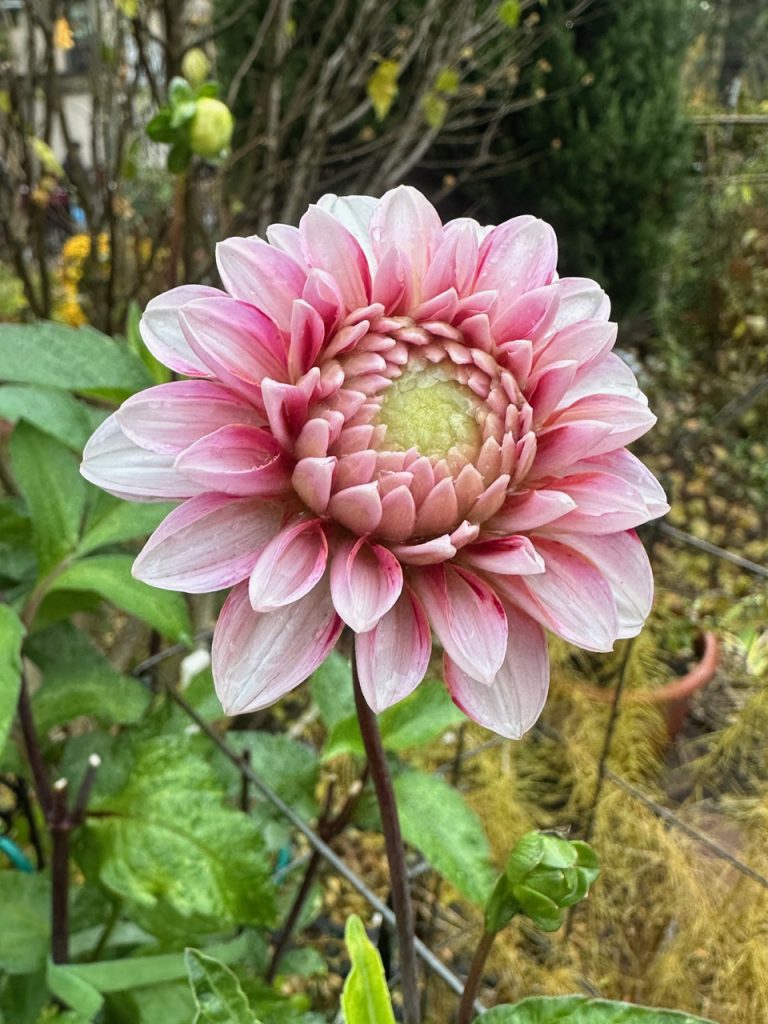
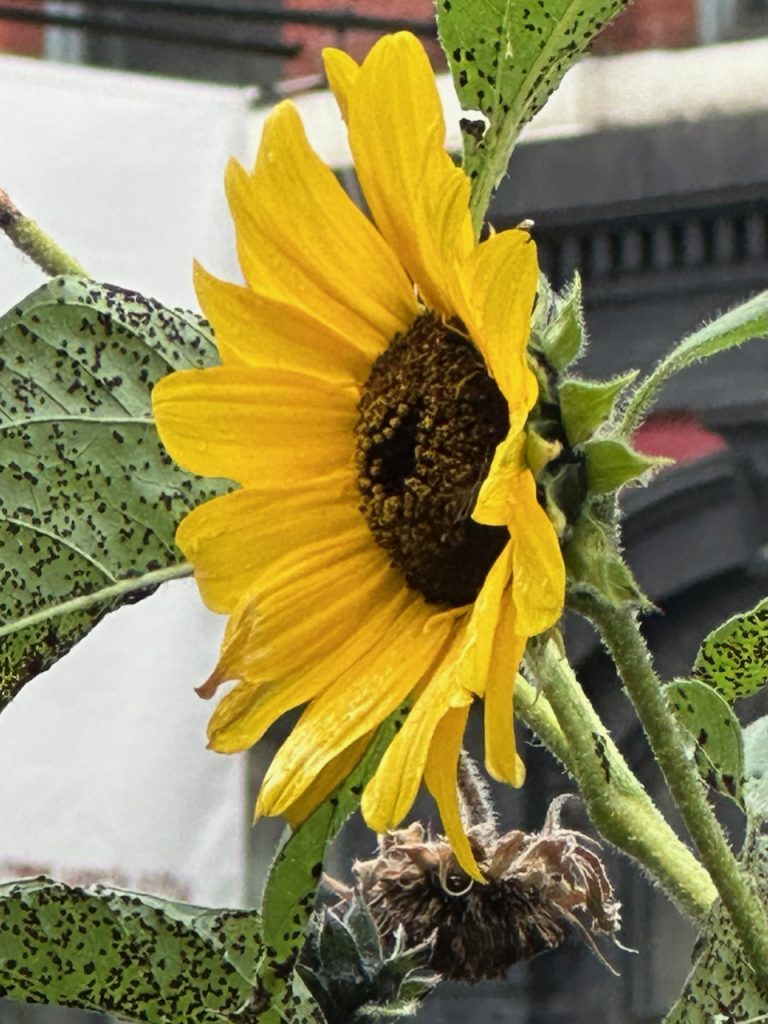
While in Spring and early summer, the color palette of our flowers is dominated by pinks and pale blues, in summer, the garden got really bright with different colors. As soon as the Helianthus, Heliopsis (sunflowers), Rudbeckia (black eyed susans and rlatives) and Coreopsis are blooming, sunny yellow shows up everywhere. Here are some photos to remind us how lovely the garden looked in July:

Ericas Echinacea were just stunning this year.

The patio pots were pretty, too.

We will have to wait for several months to see this display again, but the garden needs to sleep for a while to keep everything happy and healthy.

Season recap part one. July: A rabbit!

The growing season is winding down for real now. This coming week, the first frost is expected in our area. All summer long, we were busy gardening instead of adding to this site. But now, the evenings are long and perfect for telling what was going on since June.

In early July, something very unexpected happened. We are used to seeing squirrels and various birds and the occasional rat, but we were very surprised to suddenly find a rabbit in the garden. At first we thought that someone had dumped a pet into the garden. However, experts inspected photographs and came to the conclusion that our new resident is a wild Eastern Cottontail, a species that nobody keeps as pets. Where on earth was it coming from? We could not imagine that this bunny had hopped through the busy West Village to get to LaGuardia Corner Garden. But there is was. The experts told us that rabbits live in pocket parks all over the city even if nobody sees them; who knew?

A longish discussion ensued over what to do about this bunny. Since it is a wild animal, relocating it was out of the question. Aside from the difficulty of catching it, releasing it elsewhere was not allowed. Would it stay in the garden? Might it even reproduce as rabbits are famous for? Some of us were afraid that the bunny might not find enough to eat and others were worried that it might find too much.

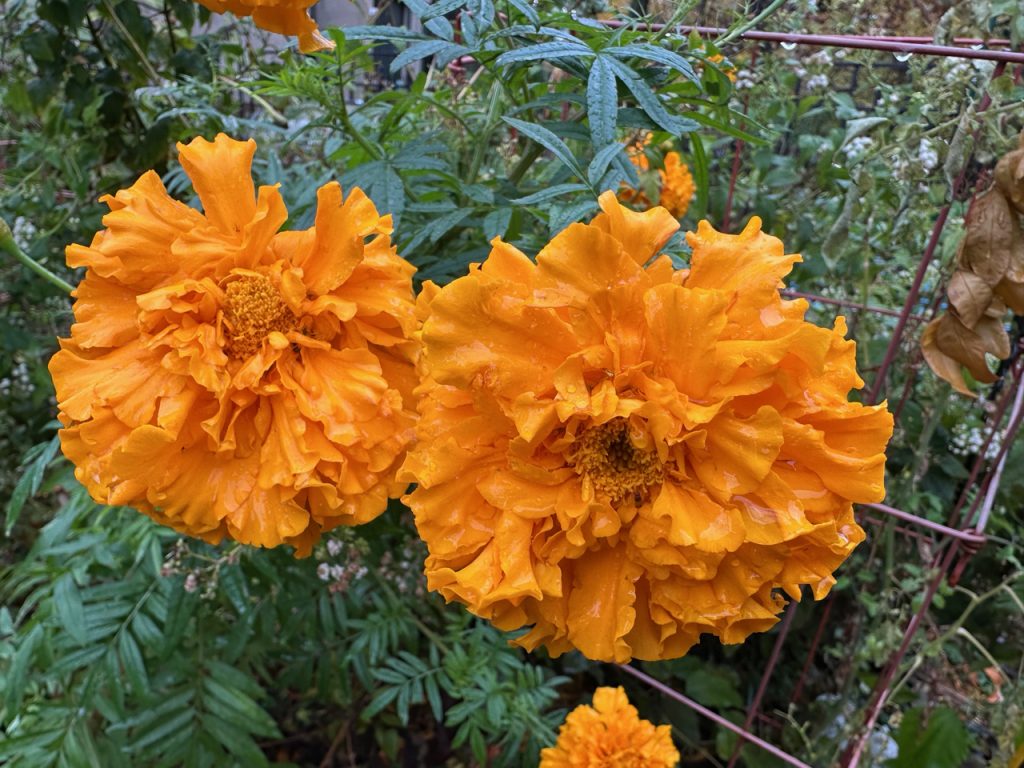
By now we know that the truth lies somewhere in the middle. The rabbit is still around and there is still only one. It looks happy and healthy. Some gardeners lost plants to its appetite. However, the bunny seems to change its diet on a regular basis. After it nibbled marigolds and sunflowers down to a stump, it moved on to kale and never touched marigolds again. The kale recovered and cosmos were eaten. These remained popular but the bunny added balloon flowers to its meals. Another favorite were asters. Some of our native asters had no flowers this year. But all in all, the damage was less than initially feared.

Now, we wonder what this little animal will do once it gets cold. Cottontails don’t dig burrows and don’t live in colonies like the European rabbits from Watership Down. They also don’t hibernate like bears. Somehow, they must find shelter and food all winter long. We are pretty sure that our rabbit will teach us another lesson about urban wildlife as time goes on.

Good news for community gardens

This week, we heard the wonderful news that the Elizabeth Street Garden is finally saved from development!

The Elizabeth Street garden is located in lower Manhattan in an area with extremely little green. It was established in 1990 by the gallery owner Allan Reiver on an abandoned lot. The garden has since evolved into a vibrant space full of plants and sculptures that is beloved by residents, visitors and quite a number of celebrities.

In 2012, the city decided to develop the lot. As soon as this became known, neighbors and local business owners came together to resist such plans and to work towards making the garden a permanent park. During the following years, a non-profit organization (ESG) was formed, donations were collected, rallies and protests were organized. The city countered by planning to build apartments for seniors on the lot, thereby pitting the need for affordable housing against the need for green space. Supporters of the garden always insisted that there were other sites for such housing.

More than a decade and several law suits later, it appears that the city has given in. Alternative sites for affordable senior housing were identified, which would support three times as many apartments as the planned building on Elizabeth Street. If this works out, it will be a win-win situation for everybody.

Let us hope that this is a new beginning. Let us hope that the officials begin to re-think the use of land not covered in concrete and stone. As temperatures soar into the high 90s this week, it is ever more obvious how important the green oases in the city are for the well-being of all of us.