Party!

Yesterday, we met for our annual June garden party.20160615_182509

The evening was perfect: it was warm but not hot or humid and even the mosquitoes stayed away until it got dark.

20160615_182443

Like every year, garden members and guests put up a wonderful spread. This year, we enjoyed at least 10 different delicious vegetarian salads and peach cake, watermelon and cup cakes for dessert.

20160615_200931

A little party guest studies Sara’s bee-coloring book.

Meanwhile, the hollyhocks and daylilies are blooming:

20160613_193500

A really tall hollyhock

20160615_093311

Our most abundant daylily


Last week in the garden

The roses are still very pretty. The old garden roses have almost finished blooming, but other varieties are open now. Last week, the lovely Ballerina and our pink Meidiland rose formed a beautiful backdrop for a blue clematis.

IMG_3161

Photo: Ellen Reznick

Last_week_of_May_2016


And there is also Peach Drift, a small shrub rose that goes beautifully with the dark blue salvias.

PeachDrift_2016_HS

Photo: Hubert Steed

We are now planting annuals for a colorful mid-summer display. And we are looking forward to lilies. Stay tuned!

Plant profile: Jack in the Pulpit

Earlier this year in March, these impressive spikes appeared under the crab apple tree. They belong to a Jack in the pulpit from East Asia (Arisaema ringens).

20160326_190148

They later developed into large tripartite leaves:

FullSizeRender

And now, exotic flowers emerged:

20160529_185047


This Jack in the pulpit is also called cobra lily. Looking at this photo, can you see why?

The cobra lily belongs to the Arum family of plants, which also includes the world’s largest flower, the titan arum  (Amorphophallus titanum).

Arum flowers are elaborate insect traps. They are actually collections of many little male and female flowers that are surrounded by a large leaf, called spathe. Our cobra lily produces a scent that is irresistible to flies. Attracted flies crawl deep into the spathe and get trapped by stiff hairs near the entrance that block their way back out. At this stage, the female flowers inside the spathe are ready to be pollinated. A few days later, male flowers mature and shower the entrapped flies with pollen. Now, the stiff hairs wither and the pollen-dusted flies can escape. Some will get fooled again and enter another flower.

If all goes well, bright red berries will develop in fall.

Who wants to see great detail pictures of Arum flowers should check out this beautiful website from England.

Another Jack in the pulpit is also blooming in our garden, just not quite as spectacularly. Its flower ends in a long whip-like tip. I don’t know the name of this species, but I believe that it also belongs to the genus Arisaema. 

20160529_185413

One last and important thing about Arum family plants: They are all poisonous to people. This is true for the entire plant from leaves over the roots to the berries. Therefore, beware of the cobra lily!

Our Rose Walk was a great success

Zephy_sm

Pink Simplicity in front of Zephirine Drouhin (Photo: Barbara Cahn)

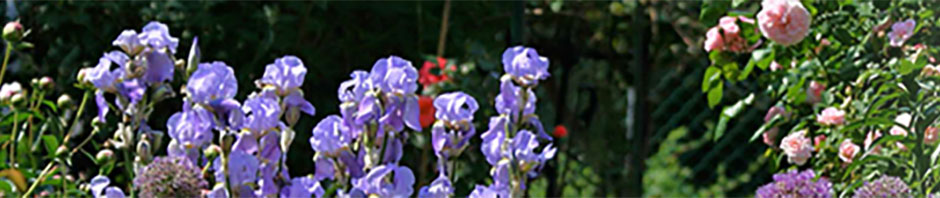
The roses and weather cooperated to make it a stunning day in the garden. People came from all over the city to see our roses, and were treated to a display of dozens of different varieties. The Old Garden Roses and some of our most unusual irises were at their peak that day. There are also clematis and columbines flowering right now, and the first herbaceous peonies are open, too. The display changes from day to day. So please come by and see what is blooming!

The garden is open every day and visitors are always welcome!


roses et al

Photos: Hubert Steed and Barbara Cahn

Zephy_2016B

A view of the garden (Photo: Hubert Steed)

Iris_sm

Amazing irises (Photo: Barbara Cahn)